LongevityET10
Single or box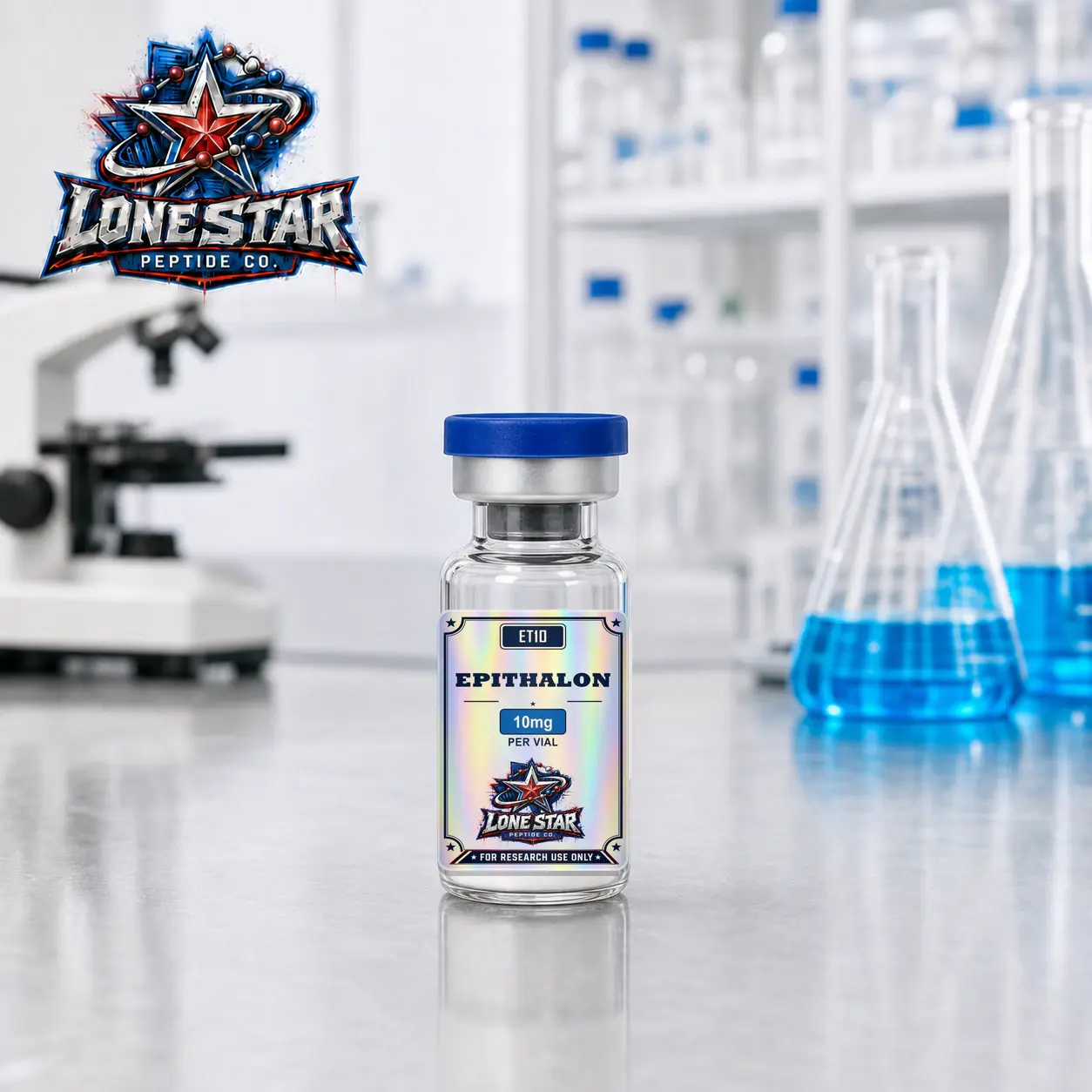

Loading product
Longevity · Research material
Package information
For product inquiries and additional information, contact lonestarpeptideco@gmail.com.
Compliance notice: For laboratory research use only. Not for human or veterinary use.
Product information is intended for laboratory, academic and commercial researchers aged 18 or over.
Material profile
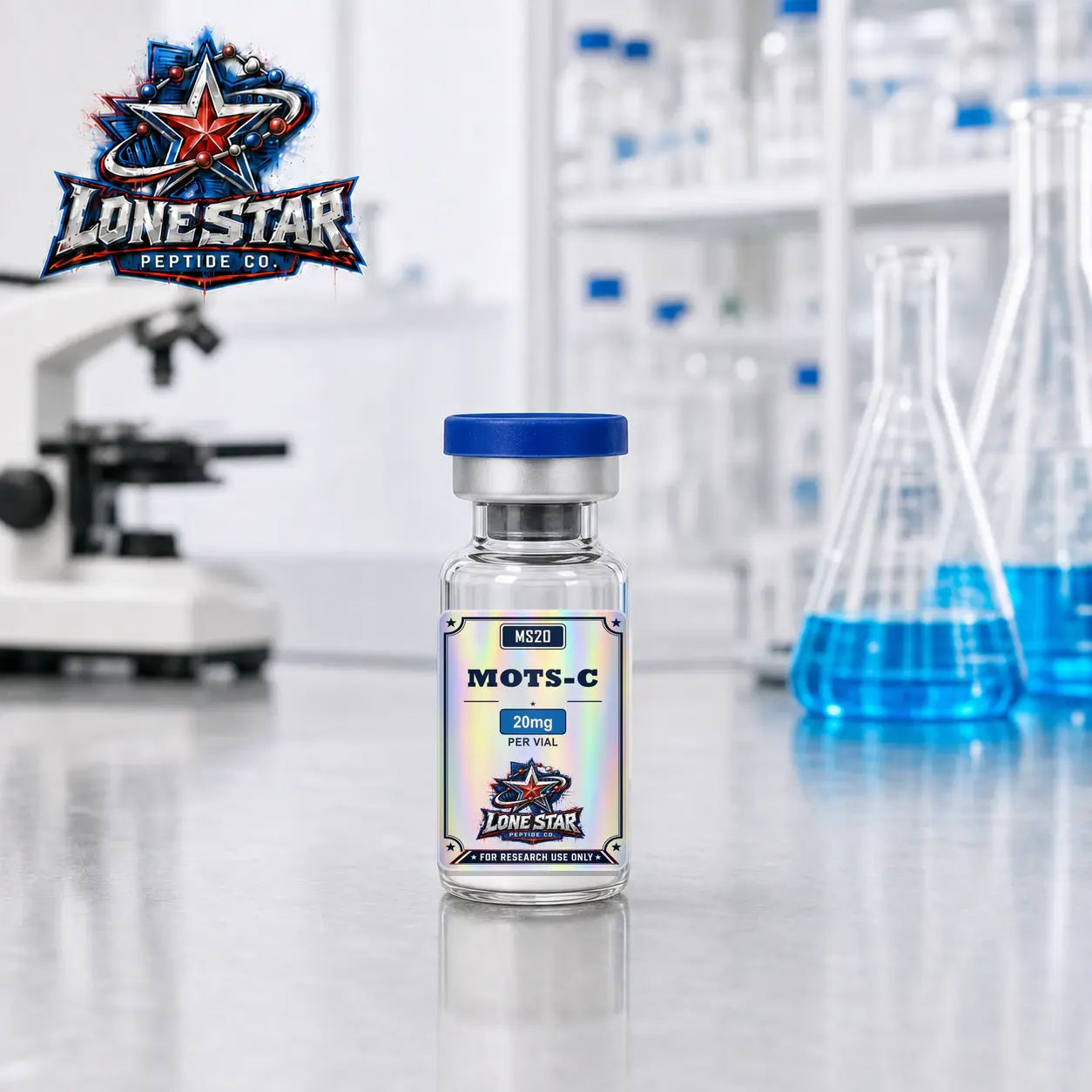
A 16-residue peptide encoded by an open reading frame within the mitochondrial 12S rRNA gene, one of the mitochondrial-derived peptide family. This listing is one vial with a 20 mg fill. A box of 10 is available as an optional package. The material is supplied for biochemical assay development and instrument calibration. For laboratory research use only. Not for human or veterinary use.
Catalog record
| Product | MOTS-c — 20 mg |
|---|---|
| Catalog SKU | MS20 |
| Compound | MOTS-c |
| Appearance | Lyophilized white powder |
| Fill per vial | 20 mg |
| Storage condition | -20 °C, desiccated, protect from light |
Laboratory handling
Ships as a sealed lyophilized vial with cold-pack insulation. Keep at -20 degrees C in a dry, dark environment; this material is both hygroscopic and light-sensitive, and repeated freeze-thaw of the sealed vial should be avoided. Handling after receipt is the responsibility of the receiving laboratory under its own protocols.
Evidence first
This listing does not currently publish lot-specific analytical results. Request and review the applicable documentation before using the material in laboratory work.
Published literature
MOTS-c is a 16-amino-acid peptide encoded within the mitochondrial 12S rRNA gene, translated and translocated to the cytoplasm and nucleus, where it interacts with nuclear gene-regulatory programs. In a foundational mouse study, researchers reported that administered MOTS-c increased endogenous AICAR levels through the de novo purine biosynthesis pathway and activated AMPK signaling in cultured cells and in skeletal tissue in mice; in the same study, MOTS-c administration in mice fed a high-fat diet was associated with reduced diet-induced adiposity markers and altered insulin-sensitivity measures relative to control mice, with no comparable effect observed in mice fed a standard diet. A follow-up metabolomics study in diet-induced obese mice reported that MOTS-c administration altered plasma glucose and insulin measures and sphingolipid/monoacylglycerol metabolite pathways. MOTS-c has not completed human clinical trials and holds no regulatory approval for any use.
Describes what the cited studies examined in the systems noted above — not a claim about outcomes for people. Not medical advice.
Product support
No downloadable certificate is currently attached to this listing. Email lonestarpeptideco@gmail.com if your laboratory requires lot-specific documentation for review.
Use the package selector to review the single-vial and box-of-10 formats, then use Email to inquire if you want to ask about that product.
The catalog storage condition is -20 °C, desiccated, protect from light. Follow the handling information on this page and your laboratory's written procedures.
No. It is presented only as laboratory research material and is not for human or veterinary use, food, drugs, cosmetics, household use, or self-administration.
Catalog navigation
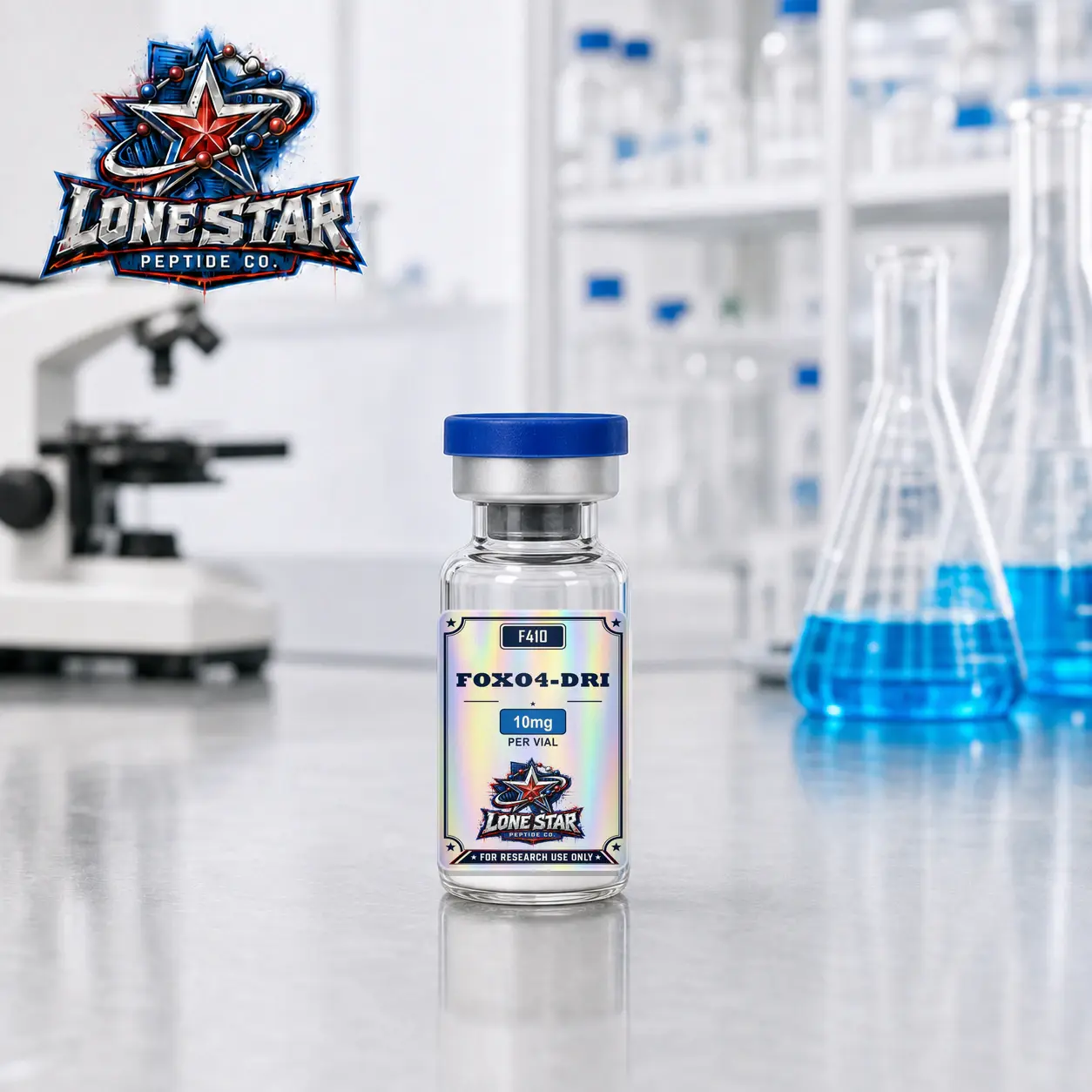
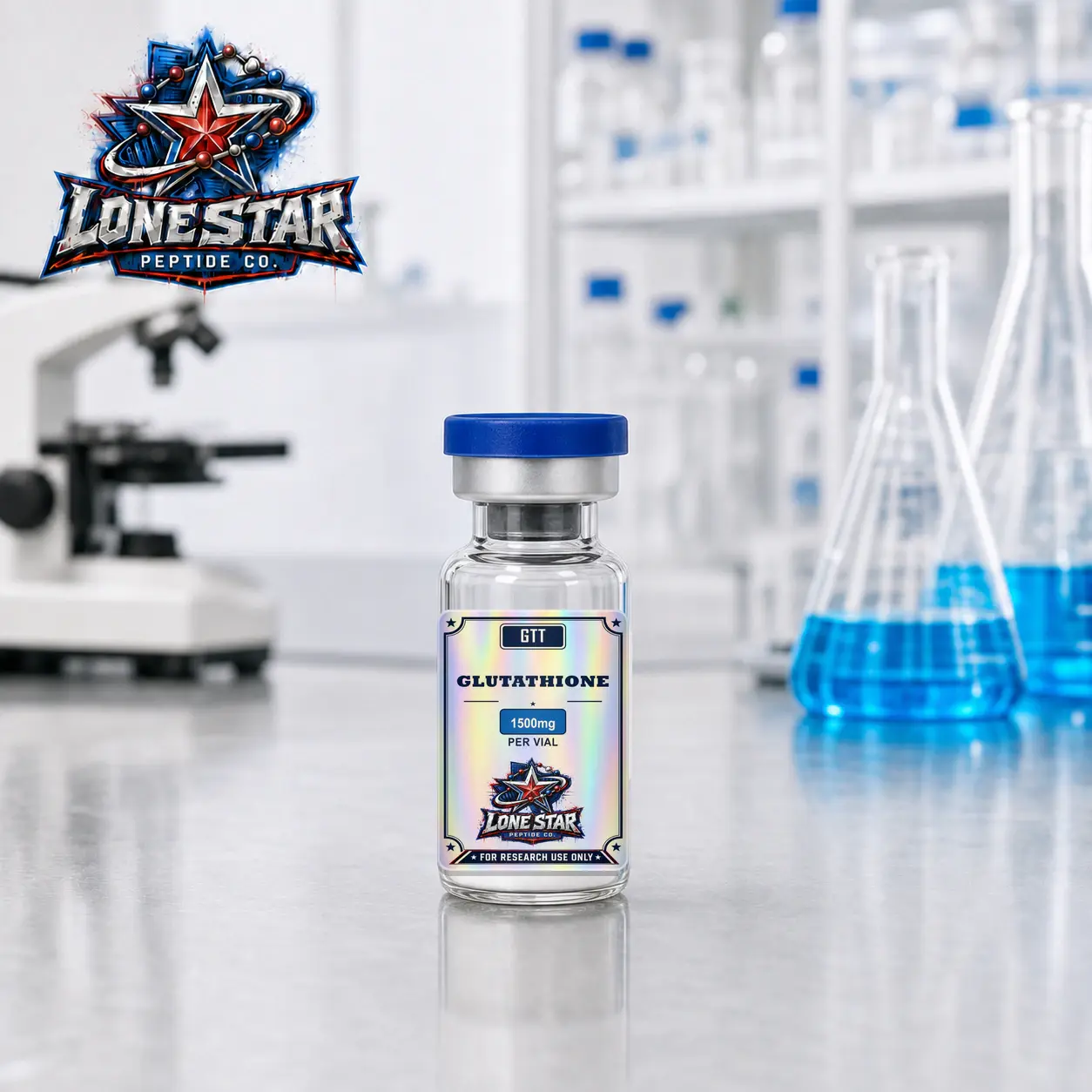
Other catalog records grouped under the same editorial collection.
Product inquiries
Contact Lone Star Peptide Co. for product information and inquiries.
Email to inquireRequired notice
For laboratory research use only. Not for human or veterinary use, food, drugs, cosmetics, household use, or self-administration. Product information is provided for material identification, handling, and analytical documentation; it is not medical advice or a statement of clinical safety or effectiveness.